

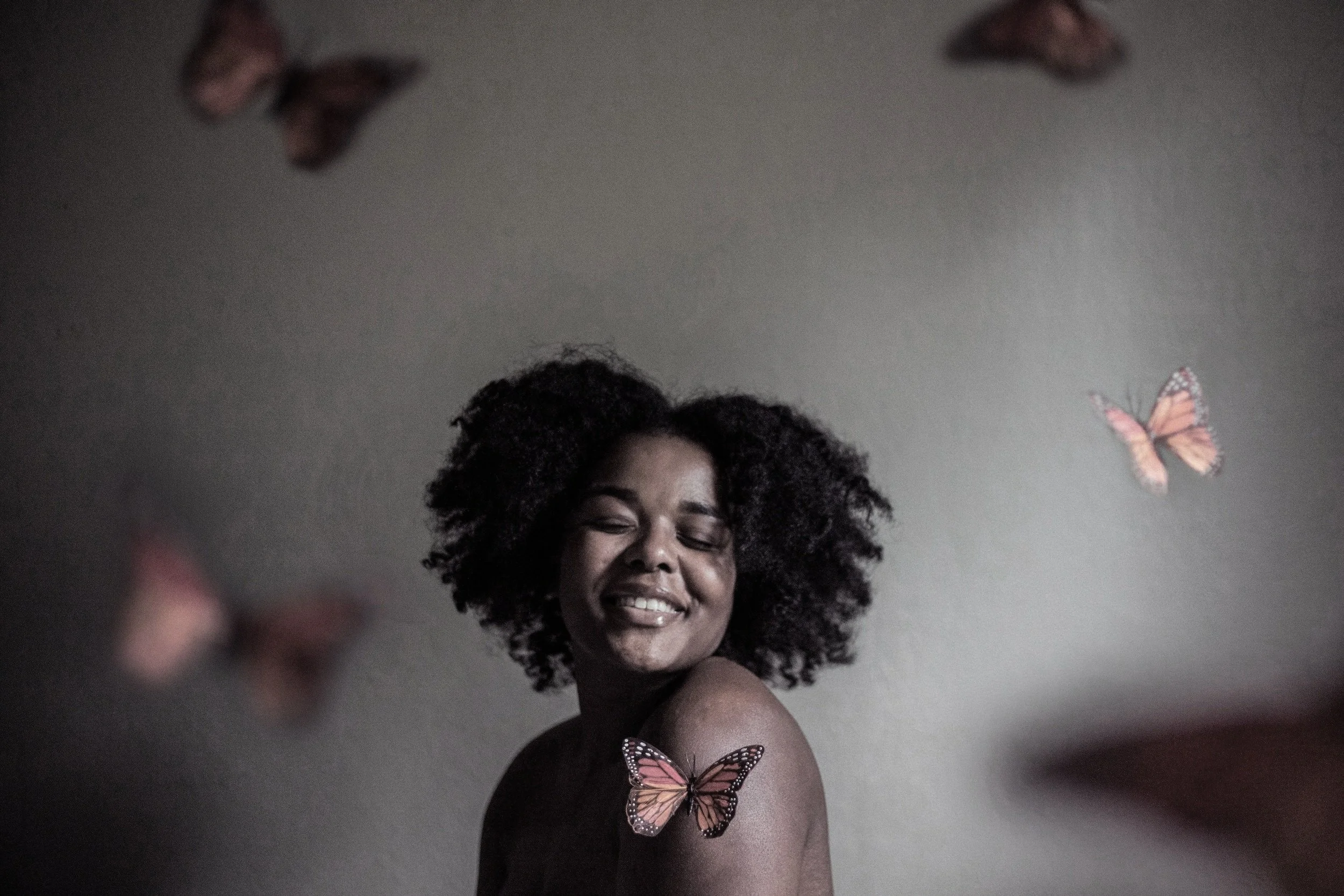
Support autism acceptance, not just Awareness
Welcome to the advocacy hub
Autistic Black women and girls are chronically underdiagnosed, misdiagnosed, and misunderstood—especially when we don’t fit the “expected” autism presentation. We mask to survive, we’re gaslit by systems, and our unique needs are dismissed in education, healthcare, and daily life.
This lack of understanding and acceptance leaves many of us isolated, unsupported, or mislabeled as defiant, mentally ill, or simply "too much." It’s not enough to “raise awareness.” We need true acceptance, accommodations, and representation that includes our lived experiences—especially from those at the intersections of race, gender, and neurodivergence.
What You Can Do:
🖤 Demand equity in diagnosis and services
🐝 Share real stories from Black autistic women
📢 Advocate for inclusive mental health practices
✍🏾 Sign the petition for culturally competent autism training
📞 Contact your local schools, clinics, and lawmakers to push for reform
OUR STORIES, OUR STATS, OUR STRUGGLES
-
This is why we advocate:
To End Diagnostic Disparities in Autism
Racial Bias in Diagnosis
Black children are 2.6 times more likely to be misdiagnosed with behavioral disorders (e.g., oppositional defiant disorder) before receiving an accurate autism diagnosis.
BIPOC individuals—especially Black, Indigenous, and Latinx children—often experience significant delays in receiving appropriate evaluations or are completely overlooked.
Cultural stereotypes and clinician bias contribute to pathologizing behaviors in Black children rather than recognizing them as signs of neurodivergence.
Gender and Gendered Bias
Women and girls are often diagnosed years later than men and boys—if at all.
Many autistic women, girls, and other female socially conditioned adjacent individuals within the community mask symptoms to survive social environments, leading to under-recognition.
Diagnostic tools were primarily developed around white, cisgender boys, leaving others misrepresented or excluded.
To Help Dismantle Structural Barriers to Formal Diagnosis
Inaccessibility for Marginalized Groups
Formal diagnosis can be expensive, time-consuming, and difficult to access—especially for:
People of color
People living in poverty or rural areas
Disabled individuals with multiple conditions
Those with negative or traumatic experiences with healthcare systems
Waitlists for autism evaluations often stretch months or years, further delaying support and services.
Lack of Cultural Competency in Healthcare
Many clinicians lack training in neurodivergence across cultures, leading to misinterpretation or dismissal of traits.
Language differences, parenting styles, and community norms are often framed as deficits rather than differences in expression.
To Validate the Truths Leading to Self-Diagnosis/Official Diagnosis
Self-Diagnosis Is Valid
Many autistic individuals have intimate, lived understanding of their inner world and behavior.
Inaccessibility to diagnosis does not invalidate a person’s self-knowledge and identity.
In the autistic community, it is common to honor self-identification when:
Someone faces barriers to diagnosis (racism, poverty, gender bias, medical mistrust, etc.)
They’ve done extensive personal research and recognize themselves in the general criteria for autistic traits as well as having displayed significant traits in childhood.
The diagnostic system was not built with them in mind.
Why This Matters:
Equity in Autism Recognition Saves Lives
Delayed or denied diagnoses mean less access to support, accommodations, and understanding—especially in schools, workplaces, and healthcare systems.
Misdiagnosis or non-diagnosis can contribute to the development of mental health challenges, isolation, and unsafe environments.
Supporting self-diagnosed and late-diagnosed individuals—particularly those from underrepresented communities—is an act of justice, not just inclusion.
-
I spent years believing something was wrong with me. I constantly rehearsed conversations in my head, mimicked the behavior of others, and was labeled with countless painful character traits that never felt true to the core of who I am.
It wasn’t until adulthood that I finally understood: I wasn’t broken—I was autistic.
But because I’m both Black and a woman, my autism went unrecognized. What were actually signs of neurodivergence were brushed off for countless years as quirks, deep personality flaws, or severe mental illnesses.
As I struggled through life; socially, emotionally, and professionally—no one offered the support I needed. Instead, I was judged, frequently misunderstood, and ultimately penalized for simply existing in a way that didn’t fit the mold.
For years, I fought silently, working twice as hard just to function. Many people including family and friends thought my challenges were rooted in laziness or weakness. But the truth is, I was living a life marked by undiagnosed autism—without access to the tools, resources, or understanding I deserved.
It took a long time, and a lot of pain before I finally began to understand myself. I had to fight relentlessly for proper care, for basic dignity, and for the right to exist on my terms.
Now, I’m expanding that fight. Not just for me, but for the many Black women, girls, and BIPOC individuals who are still struggling to be seen, heard, and supported.
The Awkward Autistic Black Girl exists to advocate, educate, and provide both safe space and tangible resources for those of us who’ve always existed—in all our awkward, authentic, and unapologetically neurodivergent truth.
We are owned, operated, and employ autistic individuals because we understand the struggles you face.
-Alisha Brown, TAABG Founder
-
When Black autistic people remain unseen, unsupported, and unfairly misjudged, the consequences can be devastating and lifelong—ranging from misdiagnoses to untreated mental health conditions, school pushout, incarceration, and tragically, suicide. However, when given the right recognition, understanding, and accommodations, we have the power to truly thrive. We create meaningful work. We lead in our communities. And we change the world by embracing and sharing our authenticity with dignity and strength.
Our goal is to bridge the gap and create a strong, reliable support system for the women and girls who are currently living an experience far below the standard level of living that they rightfully deserve. By establishing a compassionate and empowering community that actively advocates for their needs, we can ensure they have safe, welcoming spaces to exist without fear.
Additionally, we aim to provide access to crucial resources that many may never have had the opportunity to discover on their own, while also offering opportunities for them to develop essential skills. These skills will help them not only improve their own lives but also contribute positively to their families and communities, fostering lasting change and empowerment.
-
We advocate by actively challenging the widespread misconceptions and persistent misunderstandings that negatively impact autistic people—particularly those of us who are also Black, disabled, or belong to other marginalized groups and communities.
Our goal is to educate both our own communities and the world around us. When people better understand the lived experiences of autistic individuals, they become more equipped to support our needs, honor our differences, and help build systems that are truly inclusive.
This isn’t about being “overly sensitive” or exaggerating. It’s about survival. Our sensory needs, social differences, and internal experiences deserve compassion, accommodation, and adaptation—not correction, punishment, or criminalization.
Take action now
sign our petition
Encourage policymakers to adopt culturally competent autism screening tools that accurately reflect the diverse backgrounds and experiences of all individuals.
Share this page
Use your platform intentionally to support, promote, and uplift the important stories and voices of Black autistic individuals.
Contact your reps
Demand true equity in diagnosis, comprehensive support services, and inclusive education for all individuals.
donate
Help us support and fund vital advocacy services, essential resources, and engaging community workshops designed specifically for Black autistic people.
Talk About It
Uplift lived experiences. Dispel myths about autism in your community. Every conversation matters. Help dismantle the stereotypes that silence us.
Listen and learn from black autistic voices
Read, watch, and share stories directly from Black autistic creators and advocates. Listening is activism too!
Thank you
Thank you for showing up. For listening. For caring.
When we advocate for the most marginalized, we create a world that welcomes everyone. A world where awkward, autistic, Black girls don’t just survive—we can thrive.
Stay Connected:
→ Follow us on social media: @theawkwardautisticblackgirl, @iamtaabg
→ Join our newsletter for updates, stories, and events
→ Use the hashtag #TAABGAdvocates to keep the conversation going