


Free resources and downloads
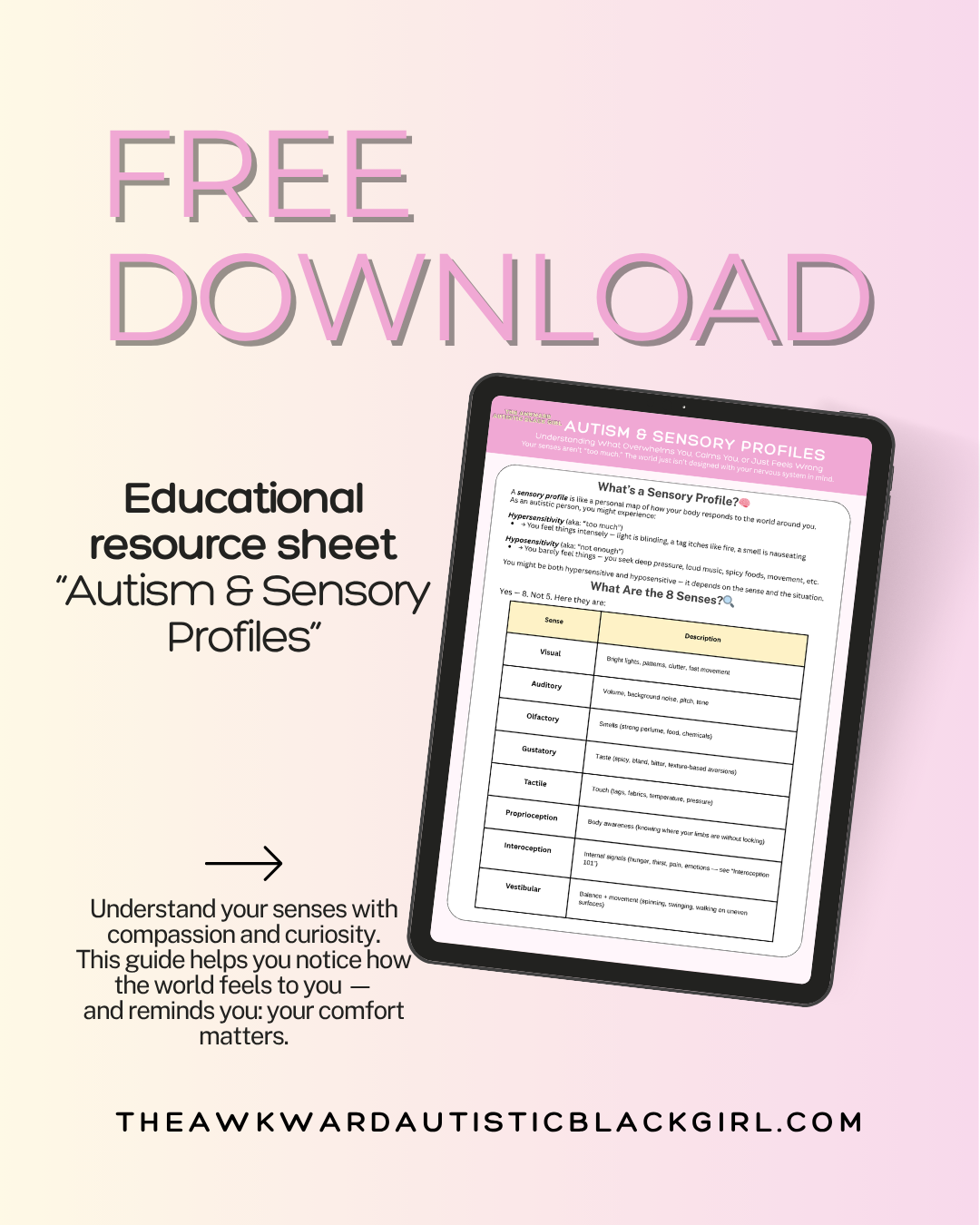
Making sense of how you experience the world.
Sensory processing shapes the way we interact with everything—light, sound, textures, movement, and more. For autistic people, these sensory differences can be profound, overwhelming, or even invisible to others. This guide helps you understand your unique sensory profile so you can better advocate for your needs and create environments that feel safe and supportive.
Inside, you’ll find:
An overview of sensory processing and autistic experiences
A breakdown of the eight sensory systems (yes, eight!)
Tools to map your own sensory preferences, sensitivities, and needs
Tips for sensory-friendly spaces and self-regulation strategies
This guide is for anyone seeking to better understand their sensory world. Whether you crave deep pressure, dread loud noises, or need movement to think clearly—your way of being makes perfect sense.

Understanding your body from the inside out.
Interoception is how we sense and interpret internal body signals—like hunger, thirst, pain, or emotional overwhelm. For many neurodivergent people, these signals can be muted, intense, or hard to recognize at all. This guide was created to help you reconnect with your body’s messages and respond with care.
Inside, you’ll find:
A breakdown of what interoception is (and why it matters)
Common ways interoception differences show up in daily life
Practical tools for tracking, identifying, and naming internal cues
Prompts and exercises to help you build self-awareness over time
This guide is for anyone who’s ever felt disconnected from their body—or unsure of what it’s trying to say. It’s a gentle invitation to listen inward, with curiosity and compassion.
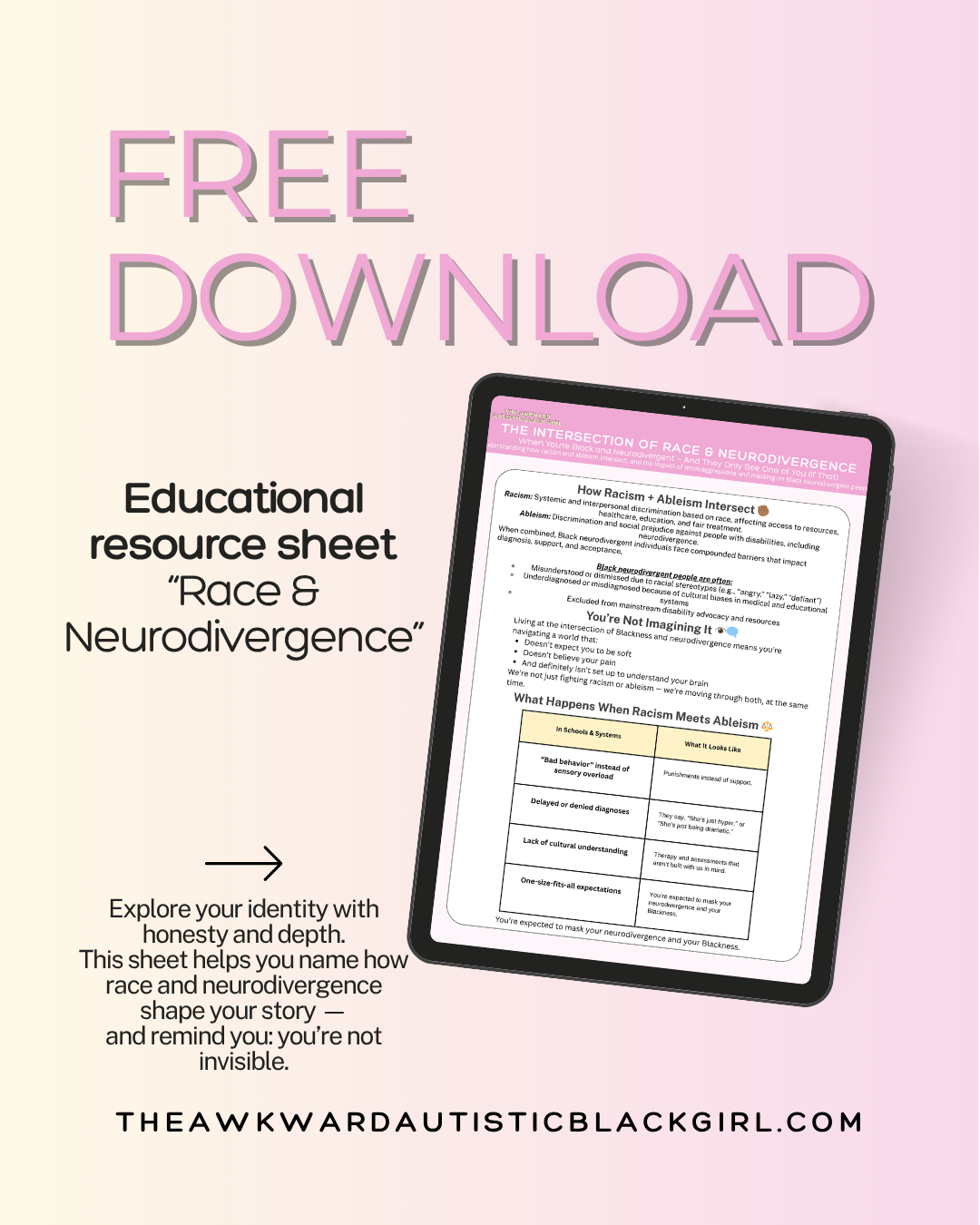
Where culture, identity, and neurodivergence meet.
Being neurodivergent while navigating race, culture, and systemic bias adds complex layers to an already misunderstood experience. This guide was created to affirm, validate, and uplift Black, Brown, and racialized neurodivergent people whose stories are often erased or overlooked.
Inside, you’ll find:
Reflections on how race, culture, and autism intersect
Common barriers to diagnosis in BIPOC communities
Language to name your experience and advocate for yourself
Space to explore identity and process internalized stigma
This guide is for anyone who’s ever felt unseen in both racial and neurodivergent spaces. It’s not just a resource—it’s a reminder that you’re not alone, and your voice matters.

A neurodivergent-friendly intro to autism — made with love, clarity, and care.
Whether you're newly diagnosed, self-discovering, or supporting someone autistic, this guide breaks down what autism actually is — beyond stereotypes, stigma, or clinical jargon.
Inside, you’ll find:
Clear definitions in plain language
A strengths-based perspective on neurodivergence
Insight into common experiences (like masking, sensory needs, and communication styles)
Gentle reminders that being autistic isn’t about being broken — it’s about being different, and that difference deserves understanding.
Perfect for individuals, families, educators, and advocates looking to approach autism with compassion and respect.
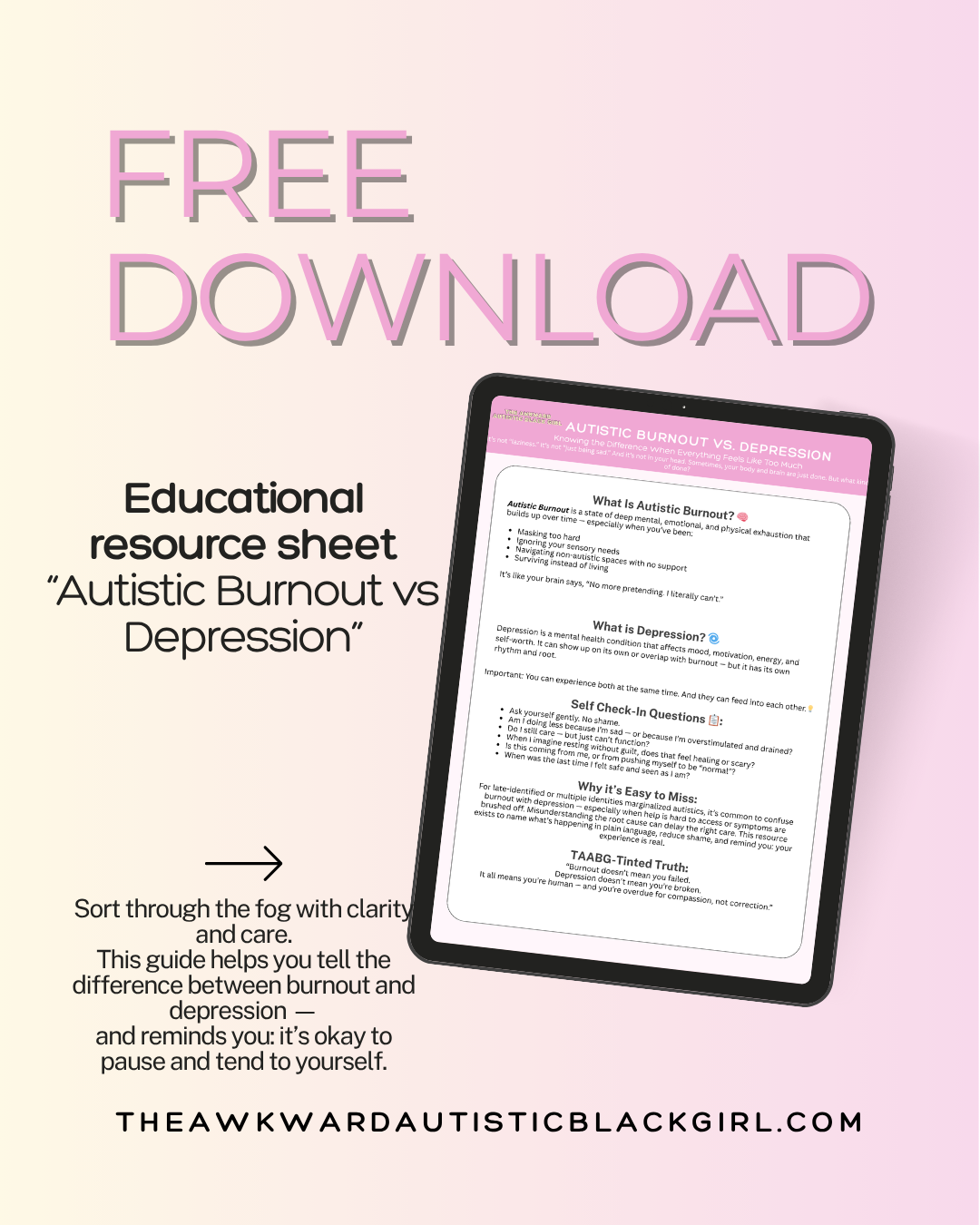
Untangling exhaustion, overwhelm, and mental health.
Autistic burnout and depression can look similar on the surface—fatigue, withdrawal, emotional numbness—but their roots and remedies are often very different. Misunderstanding the two can lead to misdiagnosis or mistreatment. This guide offers language, insight, and clarity for recognizing and navigating both experiences.
Inside, you’ll find:
A clear comparison of autistic burnout and clinical depression
Insight into causes, symptoms, and how they overlap (or don’t)
Reflection prompts to help identify what you’re experiencing
Gentle strategies for rest, recovery, and long-term care
This guide is for anyone unsure of what they’re feeling—or feeling too much to name. Your experience is real, and recovery is possible.